
Documentation is the reason we reorder. The COA library being open without a login is a real convenience for our procurement paperwork. Product was as described, 5mg cake, clean reconstitution, batch traceable.

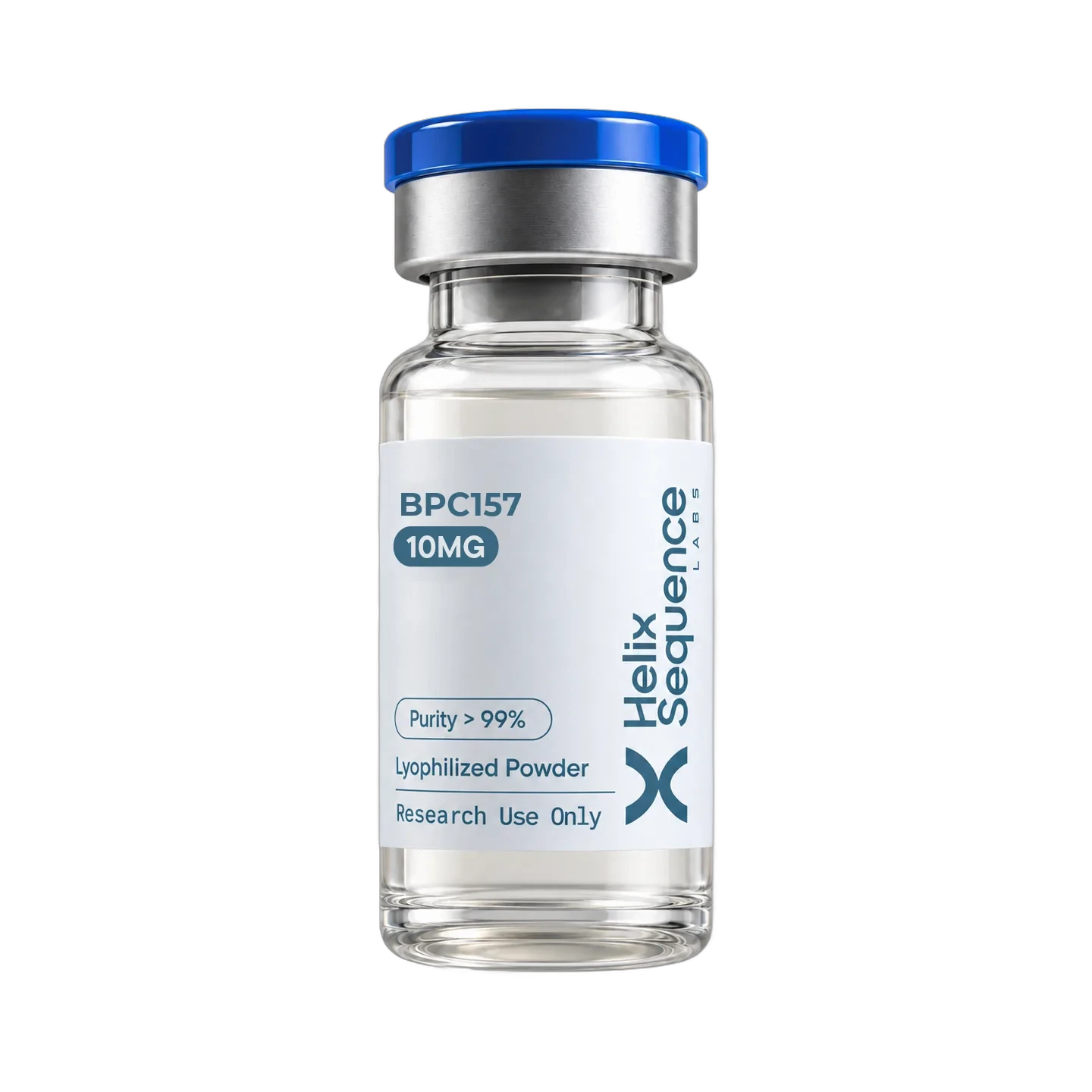
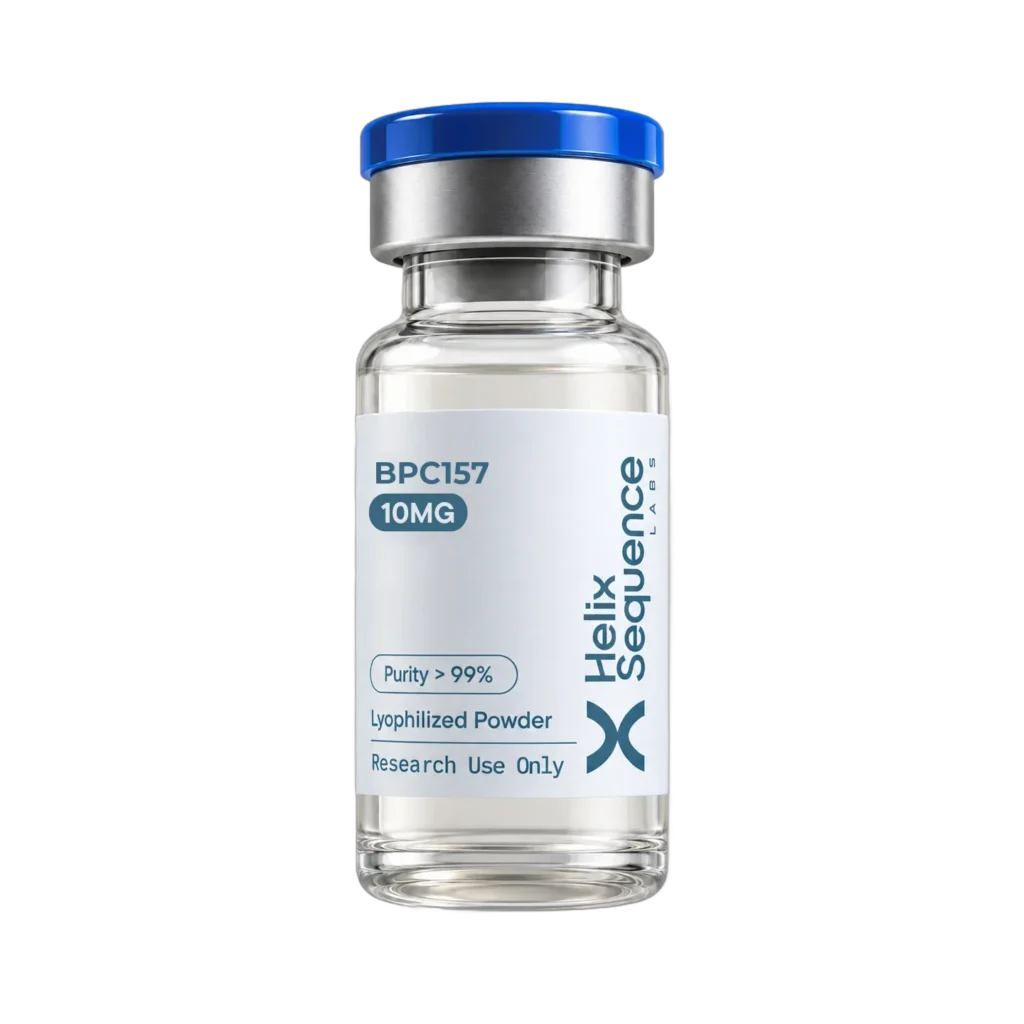
BPC-157 - available in 5mg, 10mg, 20mg. For laboratory research use only. Not for human or veterinary use.
BPC-157 is a synthetic pentadecapeptide — a chain of 15 amino acids — with the sequence Gly-Glu-Pro-Pro-Pro-Gly-Lys-Pro-Ala-Asp-Asp-Ala-Gly-Leu-Val. It has a molecular weight of 1,419.53 g/mol and the molecular formula C62H98N16O22. The peptide is derived from a partial sequence of a larger protein identified in human gastric juice, first characterized in the early 1990s. BPC-157 is classified as a gastric pentadecapeptide and is notable for its stability in acidic conditions and high water solubility, properties that are uncommon among peptides of similar size. It is produced exclusively through solid-phase peptide synthesis and appears as a white lyophilized powder in its research-grade form. This product is strictly for research purposes only.
This is a lyophilized powder vial intended for research use — this is not a capsule or oral supplement.
BPC-157 is a pentadecapeptide consisting of 15 amino acids derived from a sequence of the body protection compound (BPC) originally identified in gastric peptide extracts. In laboratory environments, this peptide is frequently studied for its chemical stability and potential involvement in signaling pathways related to cellular integrity and tissue maintenance. BPC-157 is synthesized using solid-phase peptide synthesis (SPPS) and purified via high-performance liquid chromatography (HPLC) to achieve analytical research standards.
BPC-157 has been studied across preclinical models, skin wounds, tendon fibroblasts, GI lesions, and muscle injury, with researchers reporting effects on angiogenesis, collagen deposition, cell migration, and signaling pathways including VEGF, FAK/paxillin, and ERK1/2.
Research Areas
Wound Healing: More collagen, blood vessels & reepithelialization (5,6)
Tendon Healing: Fibroblast migration & outgrowth via FAK/paxillin (1)
GI Healing: Consistent results across esophagus to lower GI tract
Tissue & Organ Effects: Studied in pancreas, liver & heart models (8)
Muscle Healing: Restored function in corticosteroid-damaged muscle
Notice
Findings summarized from published preclinical (animal and in-vitro) research, not human clinical trials. Not evaluated by the FDA. For laboratory research use only — not for human or veterinary use.
Higher collagen, reticulin & vessel density vs. control.
In a study, three experimental murine models were used – first with skin tissue wounds, second with colon tissue anastomosis, and third with synthetic sponge implantation. A portion of the murine models were presented with a placebo, whereas others were presented with the BPC 157 peptide. After the study, all models were histologically examined. The researchers reported that the BPC-157 murine models appeared to exhibit higher numbers of collagen, reticulin, and blood vessel development than the ones in the control group.(5)
In a particular study, researchers explored the theory that the peptide BPC-157 might potentially hasten wound healing compared to a control group. This hypothesis was rooted in observing possible improvements in several key areas of wound healing. These included the formation of new granulation tissue, which is critical in the healing process, along with reepithelialization. In this process, new epithelial cells form to replace those damaged by the wound. Additionally, there was an observation of potential improvements in dermal remodeling, a phase where the skin regains strength and elasticity, and collagen deposition, crucial for tissue repair.(6)
Increased VEGF-a; faster vascular tube formation, in vitro.
In a study, three experimental murine models were used – first with skin tissue wounds, second with colon tissue anastomosis, and third with synthetic sponge implantation. A portion of the murine models were presented with a placebo, whereas others were presented with the BPC 157 peptide. After the study, all models were histologically examined. The researchers reported that the BPC-157 murine models appeared to exhibit higher numbers of collagen, reticulin, and blood vessel development than the ones in the control group.(5)
In a particular study, researchers explored the theory that the peptide BPC-157 might potentially hasten wound healing compared to a control group. This hypothesis was rooted in observing possible improvements in several key areas of wound healing. These included the formation of new granulation tissue, which is critical in the healing process, along with reepithelialization. In this process, new epithelial cells form to replace those damaged by the wound. Additionally, there was an observation of potential improvements in dermal remodeling, a phase where the skin regains strength and elasticity, and collagen deposition, crucial for tissue repair.(6)
Regulated ERK1/2 phosphorylation & downstream targets.
Wound Healing
In a study, three experimental murine models were used – first with skin tissue wounds, second with colon tissue anastomosis, and third with synthetic sponge implantation. A portion of the murine models were presented with a placebo, whereas others were presented with the BPC 157 peptide. After the study, all models were histologically examined. The researchers reported that the BPC-157 murine models appeared to exhibit higher numbers of collagen, reticulin, and blood vessel development than the ones in the control group.(5)
In a particular study, researchers explored the theory that the peptide BPC-157 might potentially hasten wound healing compared to a control group. This hypothesis was rooted in observing possible improvements in several key areas of wound healing. These included the formation of new granulation tissue, which is critical in the healing process, along with reepithelialization. In this process, new epithelial cells form to replace those damaged by the wound. Additionally, there was an observation of potential improvements in dermal remodeling, a phase where the skin regains strength and elasticity, and collagen deposition, crucial for tissue repair.(6)
Increased fibroblast migration via FAK/paxillin pathway.
Consistent healing from esophagus to lower GI tract.
Documentation is the reason we reorder. The COA library being open without a login is a real convenience for our procurement paperwork. Product was as described, 5mg cake, clean reconstitution, batch traceable.
Good product, slow courier. Vial arrived well packed with a cold pack still cool. Reconstituted without issue. Only reason for four stars is the courier took six days to reach us on the west coast; the fulfilment itself shipped the next morning.
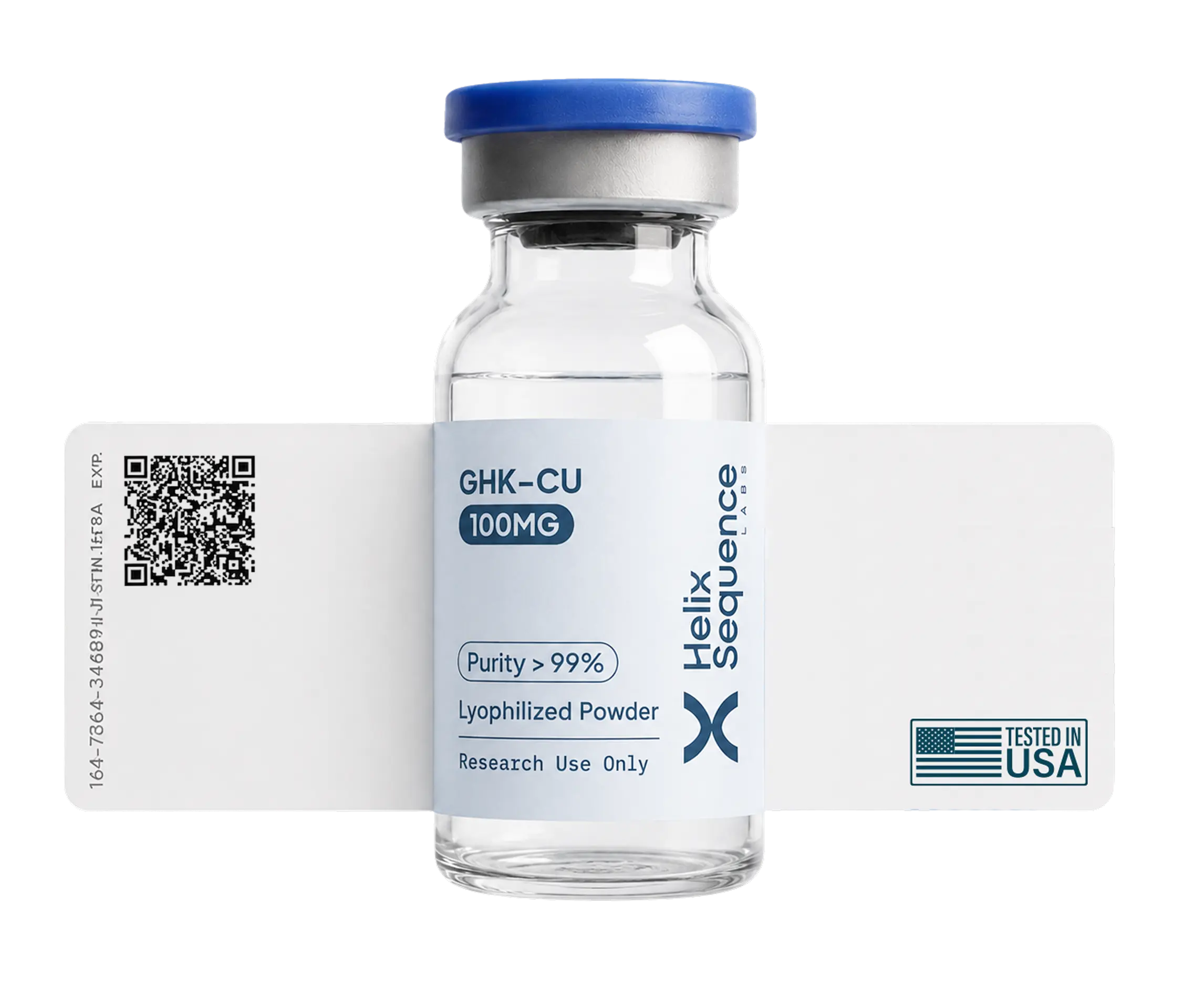
Consistent between two batches. Second order from a different lot. Ran our own identity check alongside the published COA and both lots lined up. Labels carry the batch number and a QR to the COA, which saves time when logging inventory.
COA matched the batch on the label. Ordered the 10mg for an in-vitro assay series. The certificate of analysis was already published for the batch printed on the vial, purity reported at 99.4% by HPLC. Lyophilised cake was intact and reconstituted clear in bac water with no particulates.
I had a great experience with this page. The website was easy to navigate, and it had a wide variety of products to choose from. Each item included helpful descriptions and clear ingredient information, which made it easier to compare options.
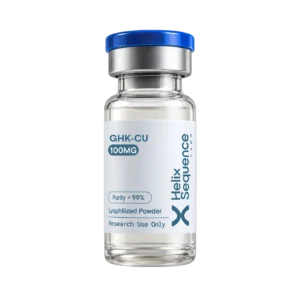
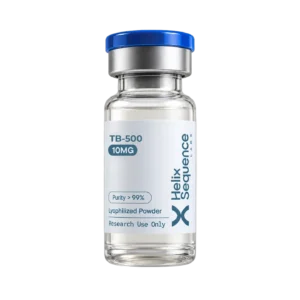
Product Finder
Two quick questions route you to the compound most aligned with your research focus, plus what's commonly studied alongside it.
For research routing only, not a medical assessment. All compounds are sold for laboratory research use only.
Question 1 of 2
Pick the pathway closest to your current work, you can browse the rest anytime.
Question 2 of 2
Helps us tailor which compound and guidance we lead with.
Your Results
Your Research Pathway
Primary Recommendation
Retatrutide
Engineered to interact with GLP-1, GIP, and glucagon receptor systems.
Often Studied Alongside
Complementary research pathways
Based on what you've told us, most independent researchers start with a single vial before scaling up.
Add a Review